Netflix’s The Devil’s Plan II, the hit South Korean reality game show, is a complex social experiment disguised as competition. The series brings together an eclectic group of contestants, including an Olympic medalist, a lawyer, a social media influencer, and others, placing them in high-stakes strategic scenarios designed to test intellect, emotional control, and alliance-building. Equal parts psychological game and character study, the show thrives on tension, unpredictability, and layered interpersonal dynamics.
One of the most talked-about elements of the season is the division between the communal living space and the prison space. This structural experiment became a source of heated online debate among viewers. The prison argument scene in particular stands as one of the season’s most emotionally charged moments. In this environment, emotions collide from multiple directions, motivations overlap, and alliances fracture in real time. Later, when contestants return from prison to cheers and celebration, the tonal shift is dramatic but equally demanding. Both extremes, conflict and release, depend heavily on the audience’s ability to clearly follow dialogue, emotional cues, and shifting character trajectories.
For English-speaking audiences, the success of The Devil’s Plan II depends significantly on its English-language dub. Many viewers have experienced watching a foreign-language film or series only to be pulled out of the moment by awkward or overly obvious dubbing. The art of dubbing is a precise and delicate craft. It requires superimposing one language over another while preserving emotional authenticity, narrative clarity, and immersion.
Reality television presents a unique challenge in this regard. Unlike scripted productions built on carefully choreographed beats, a show like The Devil’s Plan II is filled with overlapping conversations, whispered strategies, sudden tonal shifts, laughter, and interruptions, often within the same scene. In a dubbed reality series, editors must constantly balance the original Korean dialogue underneath while layering the English performances on top. Bringing structure to something unscripted while preserving its natural energy requires both technical precision and storytelling sensitivity. The English dub must dominate clearly while still retaining the chaotic realism that defines the show.
If the English sits too low, the Korean distracts the viewer. If it sits too high, it can feel unnatural or aggressive, breaking immersion. Rhythm becomes everything. Sync is not merely about matching mouth movement but about emotional timing. Even a fraction-of-a-second misalignment can disrupt the authenticity of a reaction.
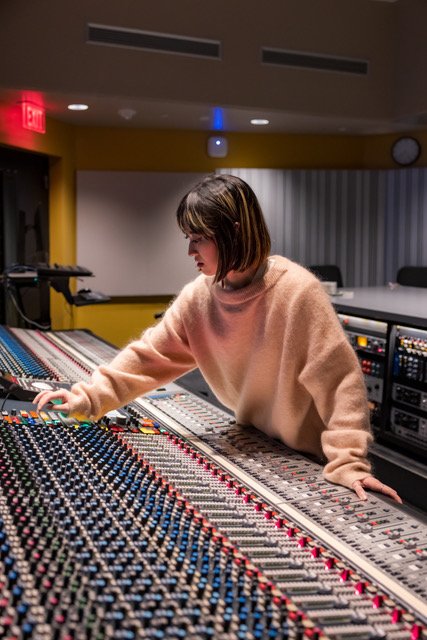
This intricate work was entrusted to Igloo Music’s sound editor Syllous Mai, at the request of Igloo Music’s owner Gustavo Borner, the Grammy Award–winning producer, engineer, and mixer known for his work on Superman, Guardians of the Galaxy Vol. 3, and Nonnas. Syllous’ work was clearly instinct-driven, blending technical editing with storytelling awareness. Managing the constant back-and-forth between the original dialogue and the English dub requires fluency not only in language but in emotional nuance. Emotional accuracy remains the priority, with technical precision serving the larger goal of storytelling. Sync is treated as performance integrity rather than mechanical alignment. Reactions must feel believable, arguments must retain their interruption patterns, and tonal shifts must land with the same weight as the original.
American audiences have historically shown resistance to foreign-language productions, but the success of films like the Parasite (Oscar-winning) marked a turning point, signaling greater openness to global storytelling. A masterful English dub can bridge the remaining gap for hesitant viewers, expanding access to international content without sacrificing emotional depth. Through her combination of technical expertise, multilingual sensitivity, and narrative instinct, Syllous plays a crucial role in making critically acclaimed series’ like The Devil’s Plan II accessible to English-speaking audiences.
The Devil’s Plan II is currently available on Netflix.
Write : Basil Thomson
 Punit
Punit