Nukleotidy, also known as nucleotides, are the basic molecules that make up the foundations of nucleic acids like DNA and RNA. Nitrogen base, a sugar and one or more groups of phosphate can be used to make up nucleotides. The interaction between the spheres constructs the molecular code, where we have all living beings storing genetic information and transferring it. Nucleotides are important to life more than just being genetic; they are important in the cellular energy transfer, signaling and metabolism.
Introduction:
Nucleotides are vital chemical substances and also the fundamental components of the genetic material of every organism. They form nucleic acids, store, transfer and express information. When it comes to the most remarkable representatives of them, we need to mention the DNA (deoxyribonucleic acid) and RNA (ribonucleic acid). Nucleotides, as we know them, would not exist without life.
Structure of Nukleotidy:
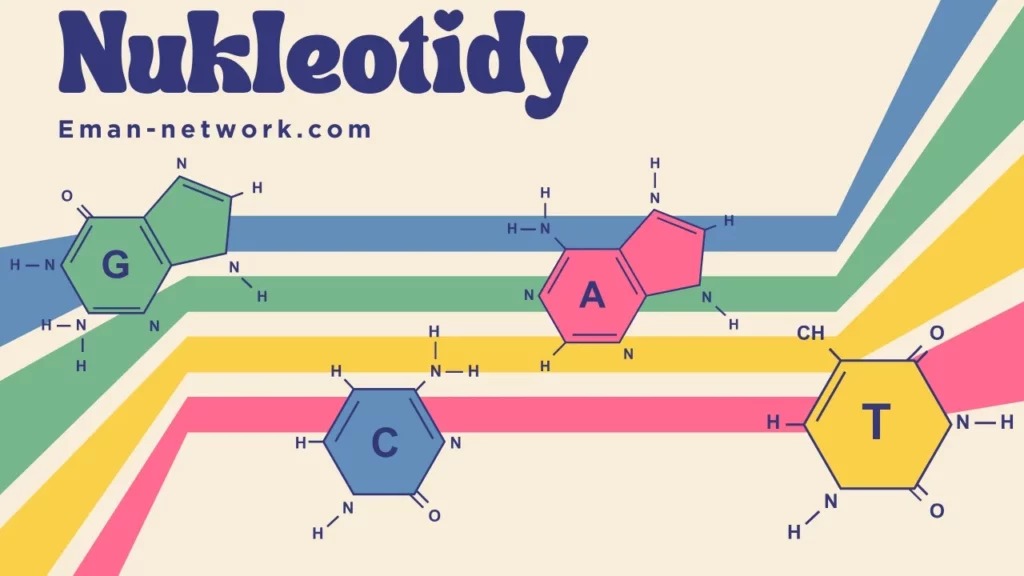
- Nitrogenous Base: This can be pyrimidine (and could be cytosine, the thymine for a DNA molecule, or uracil for an RNA molecule) or it may be purine (and could be adenine or guanine). Groundwork involves extracting or combining into some organized format, coding/genomic facts.
- Pentose Sugar: Sugar is a five-carbon polysaccharide and links the base with the phosphate group; ribose is the RNA sugar or deoxyribose in the instance of DNA.
- Phosphate Group(s): A DNA and RNA molecule has a backbone comprising one or more phosphate groups linked together by a phosphodiester bond involving nucleotides.
Types of Nucleotidy:
Based on the sugar and nitrogenous base, nucleotides may be categorized as:
- Deoxyribose sugar: The deoxyribose sugar is used in pairs with guanine (G), cytosine (C), thymine (T) and adenine(A).
- RNA Nucleotides: Guanine G, cytosine C, uracil U and adenine A are sugar-bonded to ribose sugar.
Functions of Nucleotidesdy:
Although nucleotides are mostly associated with their major role as components of DNA and RNA, they are endowed with several other significant functions:
- Information Transfer and Storage: DNA records the information of the genes, and RNA reduces the protein production.
- Transport of Energy: Energy provided to cells is the primary source, called adenosine triphosphate or ATP.
- Cell Signaling: In most signaling pathways, cyclic nucleotides (e.g. cAMP and cGMP) are signaling molecules.
- Enzyme Function and Metabolism: The nucleotides are components of coenzymes, which are very significant in metabolism, e.g. FAD, and NAD 1.
Biological Importance:
Cell division, vitality, and growth all depend on nucleotides. Their normal production or controls may cause severe diseases like cancer and genetic diseases. Since a large number of therapies are aimed at nucleotide metabolism, they are also relevant in the development of antiviral and anticancer drugs.
Nucleotide vs Nukleotidy:
Nucleotide and nucleotide differ only linguistically. It is an English word that denotes a single molecule that forms the proper organs of the DNA and RNA. The English equivalent is the Polish: nucleotide (noted nucleotides). Whereas the term nucleotide, in Polish, denotes a number of nucleotides, both of them can be used about the same type of molecules, the building blocks of genetic material.
Importance of Genetic Engineering:
Nucleotides or nucleotide in Polish are essential to forming and transforming DNA and RNA, informative molecules containing genetics. They may be interpreted in several ways:
- DNA construction and enhancement: Having used all genetic engineering technologies like CRISPR-Cas9, constructing and enhancing DNA technology is all about altering the sequence of nucleotides through insertion, deletion or replacement of genes.
- Gene Synthesis: Scientists synthesize lengthy sequences of nucleotides in the laboratory to produce a new gene or improve an existing one (so they can express it more easily in vivo).
- RNA Technologies: RNA interference and mRNA vaccines take advantage of the special nucleotides that could control the manufacture of proteins in cells.
- Molecular Markers: A Certain sequence of nucleotides come in use as a genetic tag to identify and trace a gene as part of the breeding or research program.
- Synthetic Biology: New genetic systems can design with functions not encountered in nature using customized nucleotides, such as modified or non-natural bases.
Shortly, genetic engineering cannot happen without nucleotides since they are crucial to any alteration, creation, and evaluation of genetic material.
Common Misconceptions About Nukleotidy:
These are the chief applications of the nucleotide, or nukleotidy:
- DNA/RNA construction: Nucleotides are the building blocks that make up DNA and RNA. They pass genetic information, replicate the genetic information and transfer the genetic information within the genetic code.
- Movement of Energy: Additional nucleotide pieces lower the cell’s currency, e.g. the GTP and ATP (adenosine triphosphate).
- Cell Signaling: The signaling pathway is a mechanism that employs coupled second messengers as the couriers that communicate. Examples of these second messengers are cAMP and cGMP.
- Nucleotides to other coenzymes: Nucleotides form part of coenzymes vital to biological reactions, such as NAD+, FAD and CoA.
- Biotechnology and research: Genetic engineering involves the use of man-made nucleotides in a bid to edit a genetic sequence or make a genetic sequence.
- Medical uses: Modified nucleotides apply in mRNA vaccines and antiviral agents, and cancer treatments.
- Supplemental: Nucleotide supplements sometimes add to the manufacturing of infant formulas or special dietary formulas to promote intestinal health and a healthy immune system.
Main Uses of Nukleotidy (Nucleotides):
Such are the chief applications of nucleotides, or nukleotidy:
- Molecular synthesis of DNA and RNA: The currency of genetic information forms by nucleotides; they bear information, store information and transfer information.
- Energy Transfer: Other elements of nucleotide, e.g. Cell energy represents by the molecules GTP and ATP (adenosine triphosphate).
- Cell Signaling: Second messengers, e.g. cAMP and cGMP, associate with coupled messengers in the signaling pathway.
- Nucleotides as coenzymes: Nucleotides make up coenzymes required in biological processes, such as NAD+ + and FAD, and CoA.
- Genetic Engineering: Biotechnology and research make use of artificial nucleotides in order to create or edit a genetic sequence.
- Medical Applications: Altered nucleotides come is use in mRNA vaccines and antiviral drugs, and cancer therapies.
- Nutritional Supplements: Nucleotide supplements occasionally include in the preparation of infant formulas or special dietary formulas to help support good intestinal health and the immune system.
Why Are They Important in Genetics?
In genetics, nucleotides are important because their molecular letters constitute the genetic code in the sense embodied in both the DNA and RNA forms. And here is why they matter:
- Store Genetic Information: The chain of components making up the DNA is a gene, and it is a set of instructions to construct the protein structures and coordinate the activities of the cells.
- Transfer inherited traits: The nucleic acid sequences reproduce as a copy from one generation to another during the process of reproduction.
- Direct Protein Quality: RNA nucleotides determine the amino acid sequence in proteins. It influences the development, functionality, and plasticity of an organism.
- Promote the occurrence of Mutations and Evolution: Alteration of the nucleotide sequences, namely, mutations, can introduce genetic variety that leads to evolution and adaptation.
- Genetic Engineering Targets: They may be useful as targets of genetic engineering to modify traits, treat diseases related to genetic origins. Or it can be to add or introduce new functionality in the genome of living organisms.
Put another way, with no nucleotides, there would be no genetic code. Living organisms would lack the ability to retain, transfer and adapt their characteristics.
The Future of Nukleotidy Research
Improved developments are creating new frontiers in the field of synthetic biology, biotechnology, and medicine. There will probably be future research on synthesis or modified nucleotides capable of extending the number of letters in the genetic code in order to produce new proteins and materials.
Medical research is enabling the delivery of more specific gene therapies, cancer treatment, and a new class mRNA mRNA-based vaccines. It can develop more rapidly and can customize to emerging pathogens. There are also attempts at modifying nucleotides as a source of antiviral medications to counter fast-mutating viruses.
In synthetic biology, researchers express optimism about the use of engineered nucleotides to generate all-new living organisms having new genomes. This may result in space exploration, green bio-manufacturing and adaptation of organisms to harsh environments.
It is expected that nucleotides will continue to dominate the world of innovation as DNA sequencing, editing and nanotechnology develop.
Conclusion
All aspects of life, including storing genetic information and allowing the actions of cells, rely on the nucleotides. It is the foundation of both DNA and RNA structure. Their role does not limit to genetics. It is because they involve in the transport of energy and cell signaling, besides medical innovations. Scientific research further develops. With this the nucleotides are becoming important in the area of advancing synthetic biology, genetic engineering and treatment of diseases. They are discovering these molecules and utilizing their properties to drive advancements in biotechnology, agriculture, and medicine in the future.
 Ayushi Saini