The future of energy is here! With the urgent environmental problems and a constantly growing need to find sustainable solutions, solar power appears as a hope. HMS Photovoltaik is leading the pack in this revolution, and it is transforming the way we use sunlight. HMS Photovoltaik is not only changing the way we produce electricity with innovative technology and a focus on efficiency, but it is also leading the way to a greener future. Take a tour of their revolutionary process and find out how they are illuminating our world one solar panel at a time.
What is HMS Photovoltaik?
HMS Photovoltaik is a current practice of shipping construction in which photovoltaic (solar) arrays are built into the hull of a ship as either a main or an important auxiliary power source. It is not merely a process of attaching solar panels to a deck: HMS Photovoltaik ships re-engineer hull form, energy storage, propulsion and on-board systems to fully utilize the value of sunlight at sea. Imagine solar-electric propulsion, super-efficient batteries, intelligent energy control and hybrid drive systems which enable a vessel to stop and run quietly on renewable energy for hours at a time.
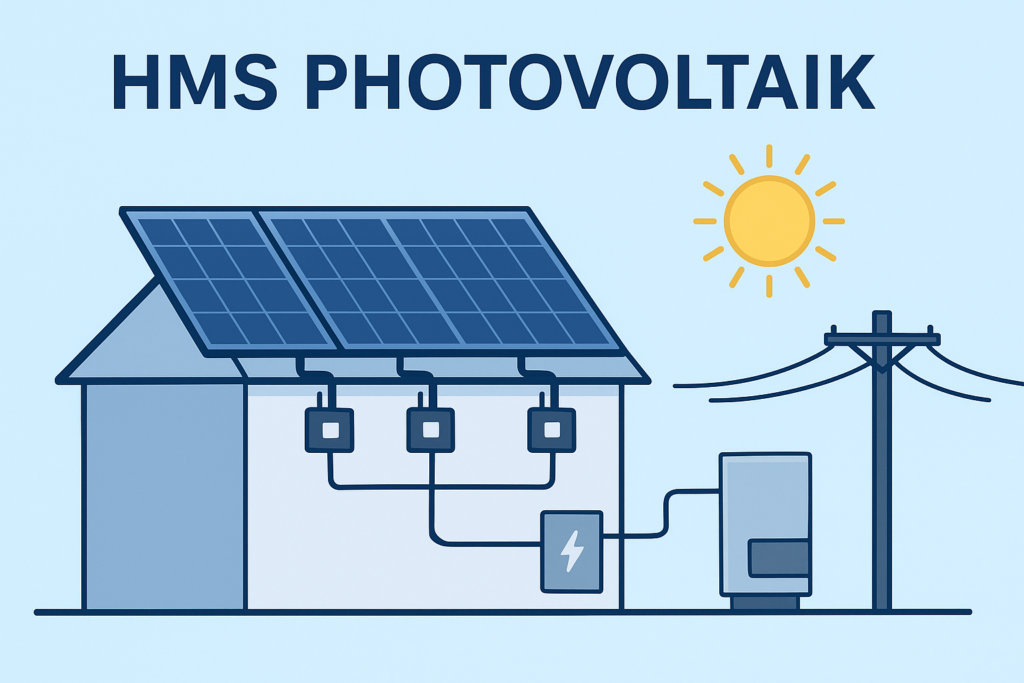
How HMS Photovoltaik Works in Your Home?
Solar Panels Capture Sunlight
This system begins with photovoltaic (PV) panels, usually on top of a roof. These panels capture the energy of the sun and convert the energy into direct current (DC) electricity.
Hybrid Controllers and Inverters
A DC converter is then used to convert DC into alternating current (AC) that supplies your home. The hybrid controller is what makes HMS special, though. It knows when to use the solar power immediately, or when to send excess power to batteries, or when to use the grid-whichever will give you the best break.
Energy Storage (Batteries)
On sunny days, the excess energy is stored in batteries. This stored energy becomes activated when the sun goes down or it rains. No sun? No panic. You still have power.
Intelligent Software & Real-Time Surveillance
You receive dashboards or phone applications displaying the amount of energy you are generating, consuming, storing and what is being pulled off the grid. Alerts if something’s off. Trends so that you can change behaviour (e.g. run appliances when the sun generates a lot of power).
History of Solar Power and HMS Photovoltaik Technology
The history of solar energy started many years earlier than the technologic era. Early mankind tapped solar power to warm and illuminate their homes, and passive arrangements in architecture were created to capture the maximum amount of sunlight.
It went to an extent of being carried into the 19th century, during which the scientists realized the photovoltaic effect. In 1839, a French physicist named Edmond Becquerel discovered that certain substances would give out electricity when it was exposed to the sunshine. It was a historical milestone in the research of the sun.
Progress in the middle part of the 20th century was accelerated by the invention of silicon-based solar cells. These initial models were costly, but they heralded a new beginning with regard to renewable energy sources.
With the increase of environmental concerns over the past several decades, inventions in photovoltaic technology have been flowing in. The current systems are more efficient and cost-effective than ever. Solar energy is part of the global effort to minimize carbon footprints and fight climate change.
The Increasing Significance of HMS Photovoltaik
To consider the particular job of HMS Photovoltaik, it is necessary to know why photovoltaics are gaining more and more significance:
- Sustainability: Solar energy will decrease reliance on fossil fuels.
- Cost Savings: The cost of electricity is reduced with the photovoltaic systems over time.
- Energy Independence: It frees businesses and households from the increasing utility rates.
- Global Climate Goals: Photovoltaic are very important in curbing carbon emissions.
All these issues are met by HMS Photovoltaik since it customizes energy systems depending on the sector.
Key Design Principles of HMS Photovoltaik
1. Large-area solar integration
Photovoltaik ships occupy as much flat and curved surface area as is practicable (decks, superstructures, even sails or wing-like arrays) with panels of marine standard PV. Flexible panels will fit in curved lines; rigid panels will fit where the weight distribution will permit.
2. Energy storage & management
Sea solar energy is intermittent. Further lithium-ion or next-generation solid-state battery banks store propulsion and hotel (lighting, HVAC, navigation) energy. Intelligent energy-management systems are helpful to dynamically assign the use of solar power, battery discharge, and auxiliary generator power.
3. Economical hull and propulsion
Hull shapes with low resistance and optimized propulsors (such as electric pod drives or waterjets) lower the power needs. Photovoltaik vessels may fit with polluting engines to act as a backup reserve or hydrogen fuel cells.
4. Hybridisation with other renewable sources
In places where feasible, solar generation should supplement by wind-assist (rotors, sails) and by regenerative braking (energy capture during slowing), to provide a multi-modal renewable solution.
Benefits: What You Get With HMS Photovoltaik?
Lower Electric Bills Year Over Year
You can save a lot by creating your own electricity and minimizing the use of the grid (and more so, during peak hours when the cost per kilowatt-hour is high). These savings can usually recoup the investment made after 5-10 years.
More Reliable Power
Your battery storage can be helpful to sustain the necessities, even during a grid outage (lights, fridge). You are not as much at the same time with power cuts.
Cleaner Footprint
With decreased consumption of fossil fuels, there would be less pollution. The advantage increases even further when you reside in an area with electricity production with high levels of carbon emissions.
Smarter Usage
Real-time monitoring implies that you can move heavy traffic (washing machines, dishwashers) to sunny days. That increases your ROI.
Real-Life Applications of HMS Photovoltaik
HMS Photovoltaik is changing the energy consumption in different sectors. Its uses are varied and effective in residential buildings as well as in commercial buildings.
In cities, HMS systems with solar panels incorporated into their systems supply clean energy to houses. This saves on electricity charges and enhances the green lifestyle.
The industries also get help greatly. Factories have utilized HMS technology to drive machinery and minimize the cost of operation. Such installations can result in reduced carbon footprints, which are in line with the global sustainability objectives.
Another sector in which HMS Photovoltaik excels is in agriculture. Solar energy has been used by farmers in irrigation systems and greenhouses, which increases efficiency by saving resources.
Neither leaves behind in the public infrastructure. HMS-operated streetlights can light up roadways in a sustainable way, which enhances road safety without straining municipal budgets.
New projects keep coming out as more and more organizations flock to the advantages of this high-tech photovoltaic technology in their business.
Applications of HMS Photovoltaik
Now the HMS Photovoltaik systems are versatile and can serve many industries:
Home Solar Solutions
The owners can install roof systems to ensure that the daily energy requirements meet, and utility bills can reduce by a considerable margin.
Commercial and Industrial Use
The large-scale photovoltaic systems help businesses, reducing the operation expenses in addition to displaying environmental responsibility.
Agricultural Use
One of these is solar-powered irrigation and farm machinery that makes agriculture more sustainable and economical.
Public Sector Projects
Photovoltaic installations in schools, hospitals, and municipal services are useful for governments and other local authorities to save money.
Technology Under the Hood
- Marine-grade PV panels: Strong, waterproof (saltwater), and anti-reflection coated panels with strong mounting systems.
- Battery arrays: This is a high-energy-density battery bank with temperature control, designed to accommodate range requirements and hotel loads.
- Power electronics: Inverters, converters, EMS (energy management systems) and smart distribution that ensure maximum harvest of the sun and safeguard battery life.
- Automation and predictive software: Software that uses weather forecasts to plan routes, and software to use power economically, predicts the amount of sunlight, and controls the speed or heading to increase the range or minimize the consumption of auxiliary fuel.
Things to Consider Before Going All In
Initial Investment
You must budget additional initial expenses. Panels are lower now; however, they come with battery, controllers, and monitoring and the price increases. Ensure that you can afford it or that you can get funding or subsidies.
Roof & Climate Suitability
Your solar exposure matters. When a large section of your roof have shade or facing a bad direction, HMS systems will not work well unless you compensate (e.g. by mounting elsewhere or trimming trees).
Battery Life and Performance
Batteries destroy quickly by high temperatures. In case you are in a very hot place, make sure that the battery system cools down or places in a well-ventilated place. And look also at warranties: the number of charge/discharge cycles guaranteed.
Regulatory & Grid Policies
Other areas do not permit you to sell back the solar power, or they are costly, or the permits are costly. Others give you incentives. Find out local rules first.
The Installation Process of HMS Photovoltaik
The HMS Photovoltaik systems install, starting with site evaluation. The experts analyze the site to ascertain the best site to place the panels and ensure maximum use of sunlight. This step entails a structural integrity and electrical check.
When planning is done, it is followed by installation. The panels place in fixed positions and get power by an inverter to convert the energy into an existing power system. Technicians also test intensively to ensure that they have efficiency and functionality, and only then complete connections. It takes this careful method to be sure that your solar solution is at its best on day one.
The Future: Scaling and Integration
HMS Photovoltaik is a stepping stone as well as a concept of a class. Anticipate successful incremental adoption: small ships and ferries, followed by hybrid retrofits of existing ships, followed by larger designs, which will combine solar and hydrogen or ammonia fuel systems as the very long-range cargo fleet. Efficiency improvement of panels, flexible PV, marine batteries, and energy forecasting will increase the viability envelope every year.
The adoption will be sped up by regulatory pressure and market incentives. The math behind Photovoltaik works even better with ports providing fast electric shore power, pricing of carbon, or more stringent emissions standards in in-port operations. In the meantime, the studies of energy-dense storage and integrated renewable propulsion will contribute to taking the concept to the mainstream.
Conclusion
Using HMS Photovoltaik to harness solar energy is a big step towards having sustainable energy solutions. Having a great history of innovation in the first days of solar technology, HMS has never stopped and strived to improve efficiency and reliability.
The explanation of the way HMS Photovoltaik functions demonstrates that it’s design and engineering is in a complex way. It is leading in renewable energy technology through the conversion of sunlight to electricity through sensitive photovoltaic cells.
The benefits are strong. Whether it is decreasing the use of fossil fuels or even decreasing the electricity bill, HMS Photovoltaik offers economic as well as environmental benefits that you can not ignore.
Its application in real life demonstrates its application in residential, commercial, and industrial applications. These systems are flexible to different requirements, whether they are to be used in powering houses or in massive projects.
In perspective, the prospects are enormous since new technological innovations keep coming up. Solar power has a bright future as innovations such as those provided by HMS are already on the path to a more sustainable world.
We are getting deeper into these developments, but the role of tapping solar power will be very important in how our energy picture will look over the coming generations.
 Ayushi Saini