
Inspiration: that’s what compels filmmaker Abel Padilla to create. Filmmaking is hard work with long hours but passion is ample fuel for those who seek to make it their lifelong pursuit. In truth, the glamorous aspects of filmmaking are resigned to a small fraction of those involved in the industry. Most, Like Abel, toil away on sets that battle the outdoor elements, budgetary constraints, and seemingly endless obstacles. This all pales when weighed against the creation of something that unifies people of different stations and backgrounds; at least that’s how Mr. Padilla assesses the situation. He professes, “If I dig into it, I photograph and tell stories about the human condition and our behavior. I feel that my work either if it is as a director or as a cinematographer has to do something with those words. The important thing for me is to see everything from the point of view of the light. Not judging. Just showing how things are without any prejudice or extra commentary. There is some power in showing things the way they are and letting the audience interpret their conclusion based on their experiences. Audiences are smart; they have always been and will always be. I want to create work where the audience is the last creative member to work creatively in the film, like a collaboration. The best thing is that there is no wrong answer because if the audience tries to understand, comment, or even talk about their feeling about the film, that contribution is valuable. It is a bridge connected between a human and a piece of art.”
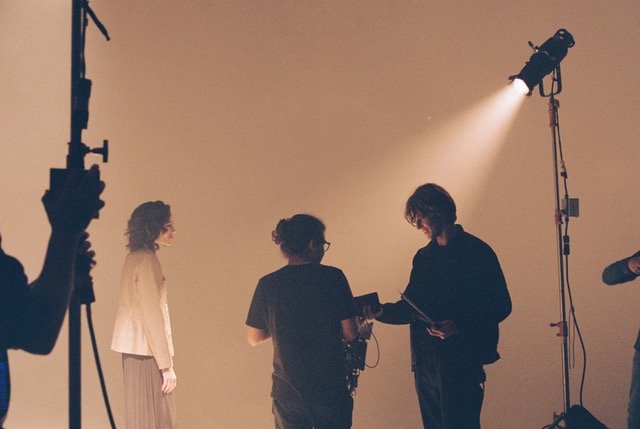
Therapist of the Year has captured the attention of many in the film community, earning awards such as Best Dark Comedy at the Indie X Film Festival and nominations from the Swedish International Film Festival, in addition to numerous others. It is starkly apparent in the film’s first scene that the creative forces behind it were taking a daring tone. The film opens with the main character (Dr. Saints) pleasuring himself in front of a mirror while loud music blares, surround by his many awards. Instantly the audience has a strong sense of who this person is. It’s also obvious that the filmmakers of Therapist of the Year are not aiming for a demure tone. There are several unexpected moments in this film, some of which are enabled by Stunt Coordinator Ray Lykins, known for his work on the Oscar Award–Winning Film Spider-Man 2, Oscar Nominated Pirates of the Caribbean: At World’s End, Golden Globe Nominated Series Hunters, and Mission Impossible-Ghost Protocol, among others. One particularly memorable moment is a scene in which Dr. Saints floats to his seat. This magical occurrence took a traditional approach to obtain a very specific experience for the audience. Padilla explains, “For me, everything had to be done practically. VFX was not an option. Not because I don’t like it but because I felt that the tone of this film needed something organic. Our cinematographer, Mario Nakasone, and his team came up on the spot with the idea of making Anton (Dr. Saints) lay on the Fisher Dolly in some way that the camera could see the floor behind him and give the illusion that he was floating back.” Fine details give this film a unique personality, such as the green and red color palette (Dr. Saints is green and Patricia is red). The idea was to show this short film as a nightmare, using the Garden of Eden helped as a reference.
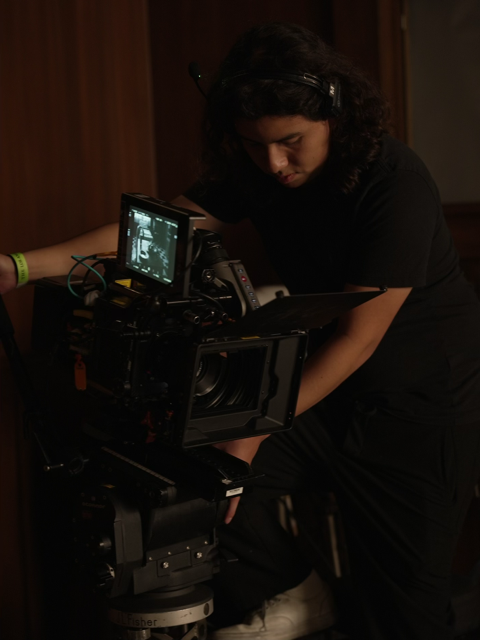
Propelled by the notoriety of Therapist of the Year (and his work on the immensely popular video podcast series Sunset Sound Roundtable), Padilla is currently preparing for his upcoming film Hopstanz, set to be filmed in his native Mexico. He hints, “The nature of the story made me think about Mexico. This is not a film about Mexico or any other country, but the culture and the craft needed in it asked for it to be made in Mexico. The script is always king when it comes to decision-making. And if you read the script, all roads lead to it being made in Mexico. I love that idea. In some way, it is my first project directing in my homeland, so it is a new exploration. This lifestyle I chose to be part of is about exploration, and this project asks for that. I feel that directing in my mother tongue is something I always wanted to do. I was probably scared because it was something new. But I just have this feeling that this new exploration benefits me as a director from every standpoint, from the spiritual level to the professional one. I can even say that this project made me connect more with my roots and be proud of who I am and the culture I grew up in.”
Writer : Basil Thomson
 Punit
Punit