Speaking about the classical Italian delicacies, it is necessary to introduce the бишкоти ди прато to the entire world. They are crunchy cookies made of almonds that came into being in the Tuscan city of Prato, and such cookies have become a representative of Italy, which is a very popular delicacy in the world. They usually come with coffee, dessert wine or even on their own as a light and yet delicious snack.
But what makes бишкоти ди прато so special? It is the ease of the preparation, the intense smell of the roasted almonds, and their traditional crunchy bite that is calling you to take a drink and then enjoy every bite. What is even more fascinating, however, is that there is a long history that spans centuries.
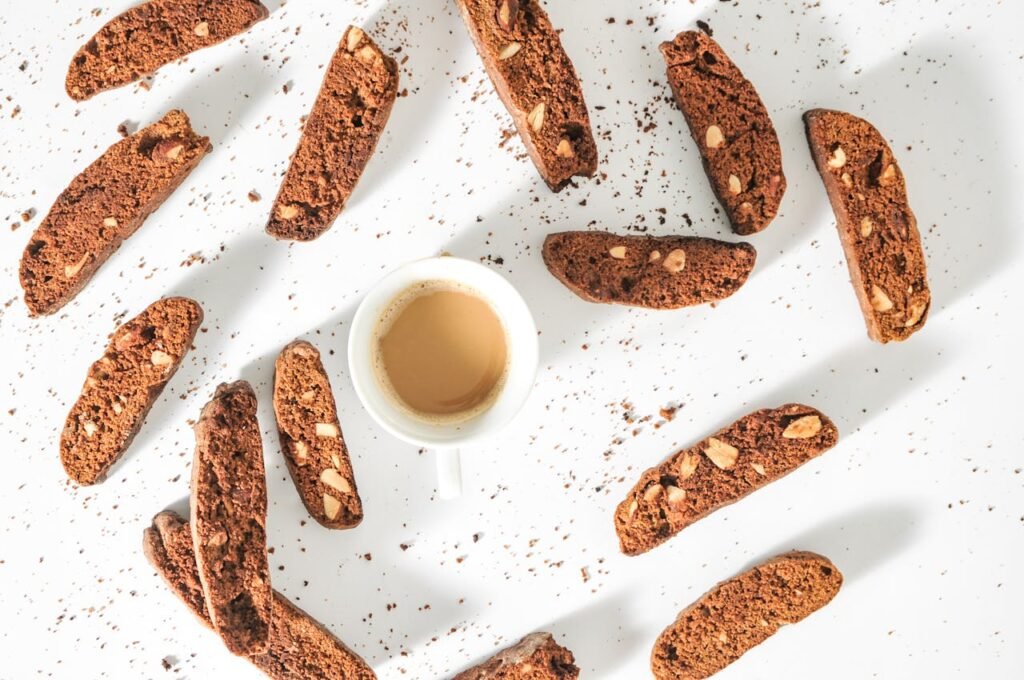
What is бишкоти ди прато?
бишкоти ди прато is a typical twice-baked Italian cookie, which originated in the town of Prato, Tuscany region, is called bishkoti di Prato. The cookies made of almond have gained global fame because of their distinctive crunchiness, easy preparation and high shelf life. It is often eaten with sweet dessert wine or coffee, and bishkoti di prato is not only a treat but also a representation of Italian culinary culture.
Easy to visit, but full of cultural taste, it is a biscuit with the rustic charm of Tuscany and the ancient baking culture.
Historical Origins
The earliest sources of бишкоти ди прато are in the city of Prato in Tuscany in the 14th century. Culinary historians have argued that the recipe was invented by local bakers to produce pastries that would not spoil as quickly. The cookies became hard and dry due to their method of baking twice, thus made them ideal for storage and long travels.
These snaky cookies became a part and parcel of the rations of travelers, merchants and even soldiers since they were easy to keep for weeks. The biscotti slowly started being popular among the Tuscan courts. It was later acquired by the whole nation of Italy.
In the 19th century, the modern form of the recipe (with whole almonds) was invented by the baker Antonio Mattei, He opened up a pastry shop in Prato. He made the standard бишкоти ди прато, and his bakery has been running till now and continues the tradition of this sweet.
The Double-Baking Process
It is the distinguishing feature of бишkoti di prato that they are baked twice:
The dough is first molded into long logs and baked until hard.
After which, when half-cooled, the logs are cut into diagues, and again baked until crunchy and golden.
This makes them crunch and dry, which is the main characteristic of their signature, and the ideal accompaniment to be served in a drink like espresso or the famous Tuscan dessert wine Vin Santo.
The traditional ingredients of бишкоти ди прато
- flour
- sugar
- eggs
- whole almonds (they are traditionally still unpeeled to maintain additional flavor)
- a pinch of raising (in modern days)
Interestingly, the conventional recipe lacks butter and oil, contributing a light composition to the cookies and at the same time making them rich with the help of the almonds.
Flavor Variations
Although the initial recipe of the bishkoti di prato utilises only almonds, with time, bakers have tested new blends of flavour. You can now get biscotti with:
- Pistachios – bring out a mild nutty sweetness.
- Chocolate chips- a contemporary flavour that has the right amount of sweetness and crunchiness.
- Cranberries/dried cherries- adding a bitter flavor to the sweet bottom.
- Anise or zest of citrus – to make it smell good and refreshing.
But purists claim that there is no substitute which is a match to the original almond biscotti of Prato, which gives the very Tuscan spirit.
A Symbol of Tuscan Culture
To Tuscans, biшkoti di prato are not just cookies; it is a cultural icon. These are normally accompanied by a glass of Vin Santo, a dessert wine. The ritual is not so complex and simultaneously pleasant: it is only necessary to put the biscotti in the wine, and to wait until it gets a little softer and tastes the perfect blend.
This culture represents Italian hospitality and sharing. They say that a meal is not complete without something sweet in Italy, and biscotti qualify well to play the role.
бишкоти ди прато in the Modern World
Biskoti di prato are now a world trend. You may meet them in Italy and in cafes, bakeries and luxury stores all over the world. Their versatility allows them to use on any occasion:
- Breakfast- dipped into cappuccino or latte.
- Afternoon snack- accompanied by espresso.
- Post-dinner- it serves with wine, liquor, or even hot chocolate.
- Gifts- beautifully wrapped, they are a fine present or Christmas gift.
Several bakeries have now provided gluten-free or low-sugar alternatives to suit the contemporary taste, although still preserving the flavor of the traditional version of the recipe.
Why бишкоти ди прато Remain Timeless?
The fact that these Tuscan biscuits are so popular may attribute to several distinctive features:
- Long history – they have a centuries-long cooking tradition.
- Balance of flavor- a fine balance of nutty richness and sweetness.
- Durability- You can keep them for weeks without deteriorating.
- Combining with versatility – they are complementary to coffee, tea or dessert wines.
- Minimalism: Simple ingredients.
Home-Made Recipe:
Although the original biscotti in Prato can consume there, it is very simple to prepare it at home.
Ingredients:
- 2 cups (250 g) all-purpose flour
- 3/4 cup (150 g) sugar
- 2 large eggs
- 1 1/4 cups (150 g) whole almonds
- 1 tsp baking powder
- a pinch of salt
Instructions:
- Preheat the oven to 180°C (350°F).
- Whisk the eggs and the sugar until light and creamy.
- Combine flour, baking powder and salt to make a dough.
- Mix in whole almonds.
- Roll the dough into two logs and bake it some 25 minutes.
- Take off, allow to cool a little, and cut in a diagonal into cookies diagonally.
- Bake once more 1015 minutes until crisp and golden.
- Keep in an airtight container- they will last weeks.
Taste and Texture of бишкоти ди прато
When you take a bite off with bite of the biscotti di prato, you get the hard crunch and the nutty flavor of the toasted almonds. The biscuit is not too sweet but not too much of one, thus making it a perfect snack in light or a light dessert.
The almonds don’t peel and are whole, and therefore provide texture and depth. In contrast with the soft cookies or biscuits, бишкоti di prato will retain its shape when it dips, being the ideal partner of warm drinks.
How бишкоти ди прато is Served in Italy?
It is customary in Tuscany to eat bieshkoti di prato after a meal with a glass of Vin Santo, a sweet wine that is useful as a dessert. The locals like dipping the biscuit in the wine so that it softens on the inside.
Although the traditional pairing is Vin Santo, nowadays coffee, espresso, cappuccino or even tea are also there. Others even drink it with hot chocolate or liquor.
As a breakfast pastry, or an after-dinner dessert, бишкоti ди прато is a dish which suits to all kinds of meals.
Cultural Significance & Identity Biscotto
Although this overall term simply signifies any twice-baked cookie, biскоto di Prato has a regional nature attached to it that ties to Prato. They are the symbols of artisanal traditions, hospitality, and Tuscan cuisine in Tuscany, which regularly include in family events, local bakeries, and food carts.
The bakeries of Antonio Mattei still hail as being able to hold on to tradition. The cantuccini (cantuccino), or little corners, is ambiguous to a certain extent with biscotto di Prato, because of similarity in style, but also in that word usage is sometimes useful to describe them based on their ingredients and texture, when they are purists of regions.
Fun Facts
- Biscotto derives from Latin bis coctus, which means twice baked.
- The bakery of Antonio Mattei, located in Prato, still regards as the house of the real biscotti.
- Biscotti became a favourite snack of Renaissance writers and artists to eat with wine.
- They had a lengthy shelf life and transported by the sailors on lengthy journeys by sea.
Serving Ideas and Pairings
Despite the conventional manner of consuming бишкоти ди прато, which is with Vin Santo, there are numerous contemporary methods to enjoy them:
- With an intense espresso to make it very Italian.
- and a creamier balance with cappuccino.
- And herbal teas to have a light afternoon snack.
- There goes hot chocolate to warm you up.
Every combination is a different experience of the crunch and taste of these classic cookies.
Conclusion
The bishkoti di prato are not just cookies but cookies that pack with the Italian tradition, history, and culture in each bite. Their ancient history amazes the residents and tourists who go to the countries and witness the tradition of dipping and sharing to connect people to the same ritual.
Crispy, fragrant and full of almond taste, these Tuscan treats are a classic reminder of the masterpiece of Italian baking. Biskoti di prato will taste just like Tuscany, regardless of whether in a Florentine café or a Prato bakery, or on your own kitchen table; they exude the warmth, the generosity, and the eternal love of cooking of Tuscany. In any crunch, there is a bit of history – and that is why бишкоти di Прато is a real delicacy.
 Ayushi Saini
  rocktabbu000786
  Punit
Punit